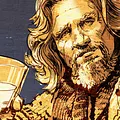
The Dude has been thinking about the PayPal thing
So I’m sitting here, White Russian in hand, watching the news, and I see this thing about how the guys who used to run PayPal are now basically running the government. And I think, man. Man. That’s a lot to process before noon.
Let me back up.
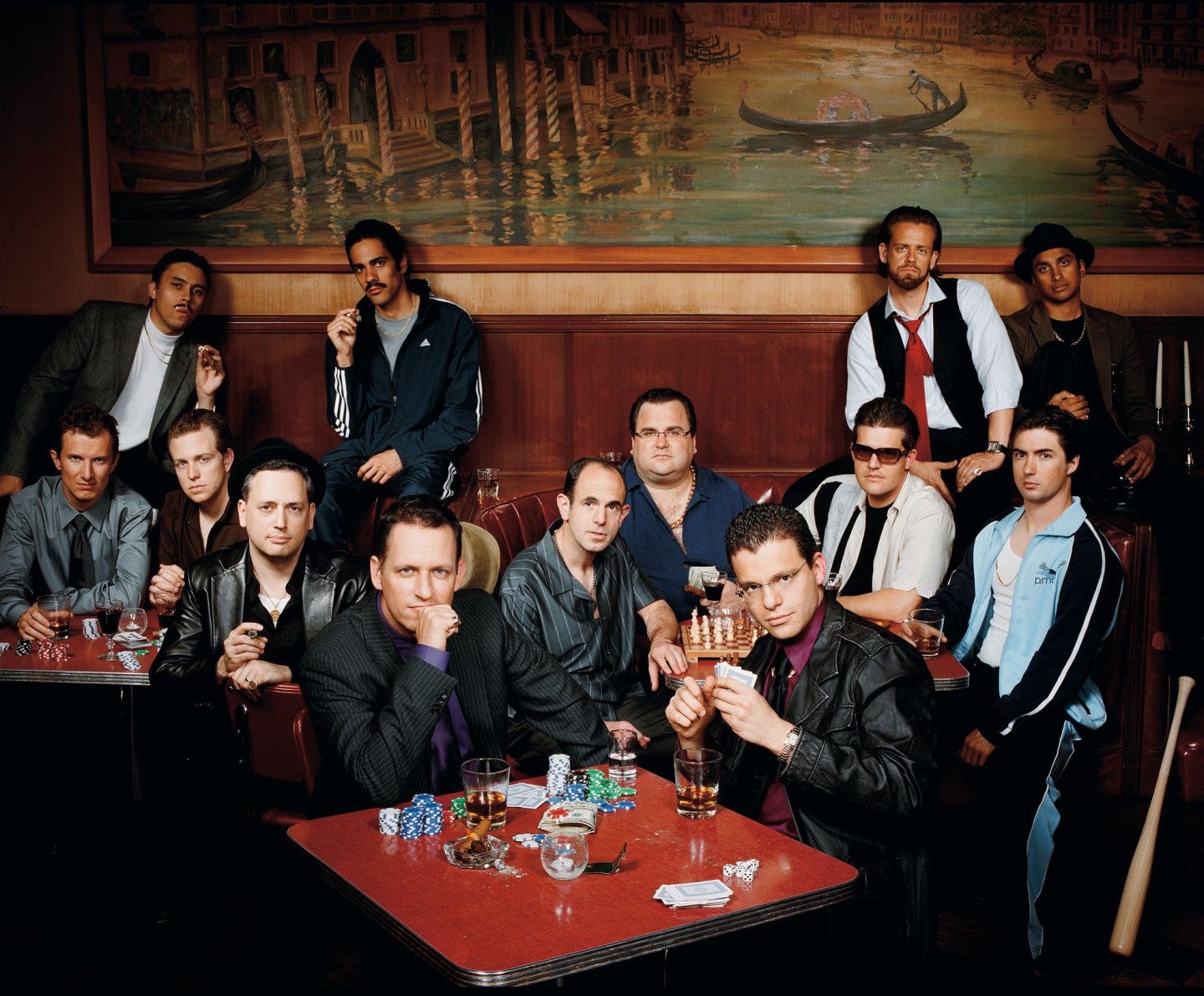
In 2007, Fortune magazine did a story about a bunch of dudes who used to work at this payment company called PayPal and kept starting companies together. For the photo, they dressed up like the mob. Suits, gold chains, the whole thing. They called themselves the PayPal Mafia.
I thought that was pretty funny at the time.
It is less funny now, man. It is considerably less funny now.
Because three of those dudes are running the federal government. One of them owns the platform most people get their news from. Another one just got put in charge of whatever TikTok’s algorithm decides to show you. And another one — and this one really gets me — is building the surveillance infrastructure for what he described, at a meeting with investors, as a system where citizens will be on their “best behavior” because everything is constantly recorded and reported on.
He said that. Out loud. To investors. As a pitch.
The Dude does not find that groovy.
The Lucky Part Nobody Talks About
Here’s the thing about these guys that I keep coming back to, man. The whole story they tell about themselves — the genius, the vision, the hustle — it kind of skips over the part where they just got incredibly, historically, once-in-a-generation lucky.
PayPal got bought by eBay in October 2002. That’s when everyone got their money. And here’s the thing — the dot-com bust had just wiped out basically every other tech startup. Everyone else was broke. The venture capital guys had nothing to invest in. The whole market was on the floor.
And these guys showed up with pockets full of eBay money.
They put that money into the next wave of stuff — Facebook, YouTube, LinkedIn — and the next wave happened to be the biggest value-creation cycle in the history of commerce. Everything went up. Their stuff went up with it.
Man. Am I wrong? Am I wrong?
Being rich and available in 2003 is the whole story. That’s it. That’s the secret. The rest of it — the first principles thinking, the contrarianism, the vision — you can kind of put that in the same category as my rug. Nice to have. Not what tied the room together.
The Guy Who Went The Other Way
There’s this one dude, Reid Hoffman, who took the same money from the same exit and went Democratic. Backed Hillary. Invested in OpenAI. Argued that AI should be regulated. The whole opposite direction.
Which means all the other guys chose to go the direction they went.
That’s important, man. It wasn’t gravity. It wasn’t inevitable. One of them looked at the same pile of money and the same network and the same historical moment and made a different call. Which means the rest of them — the ones building the surveillance state and deregulating crypto and running DOGE — they decided to do that. On purpose.
I just think that’s worth sitting with for a minute.
The Doctrine Dude
There’s this guy Sacks. David Sacks. He was at PayPal, made his money, started a podcast, and built a whole persona around being the guy willing to say the uncomfortable thing.
In March 2020 he wrote a piece saying COVID lockdowns were destroying everything and the cure was worse than the disease. He was wrong. A lot of people died. He never really updated the argument. But the persona was set.
Now he’s been the AI and crypto czar at the White House. He wrote a stablecoin bill. He didn’t finish the crypto market structure bill he also said he’d write. His time was up after 130 days and they promoted him onto a federal science advisory council as co-chair.
Didn’t finish the job. Got promoted anyway.
Man. The Dude has had some jobs where that didn’t work out that way.
The ‘Barnacle’
Okay so here’s the character I find the most philosophically interesting, man. There’s this guy Calacanis. Jason Calacanis. He was not PayPal. He was a tech blogger who made an early investment in Uber and then attached himself to the Sacks and Thiel network so completely that he’s now in the group chats, on the podcast, and part of every political conversation these guys have in public.
Now. I want to be precise here, because I think about ecology sometimes when I’m bowling.
A barnacle is not a failure. The barnacle is very good at what it does. It finds something larger than itself that’s moving through productive waters, attaches at the waterline, and extracts nutrients from whatever the host moves through. It’s hard to remove once it’s on there. It goes wherever the ship goes.
Calacanis found the hull, man. He has been at the waterline ever since, his podcast microphone pointed upward, performing the id that the principals would rather not perform themselves. When the California wealth tax came up last year, it was Calacanis calling it confiscation and illegal and civilization-ending while the others nodded thoughtfully at a safe remove.
The attack dog function has value precisely because it gives the network’s actual power players distance from the aggression.
The Dude respects the commitment, even while finding the vibe pretty unchill.
The Machine
So Sacks and Calacanis and two other guys — Friedberg and Chamath — do this podcast called All-In. It gets a few million downloads. The tech press covers it like it’s independent analysis.
I’m going to be straight with you, man. It is not independent analysis.
It is four extremely wealthy men with overlapping investments and overlapping political interests agreeing with each other about politics for two hours. The “debate” is four guys arguing about the degree to which they agree. The thing that makes it look like analysis rather than a donor-class group therapy session is the production values.
Here’s what the machine actually does. The arguments that get workshopped in the billionaires’ group texts — and we know they have group texts, man, this has been reported — show up on All-In the following week formatted to sound like they were reasoned from first principles. Like someone sat down and thought about it carefully. Not like someone got a text from their billionaire friend at 11pm and decided it was a good take.
That’s credibility laundering. It goes in as a private consensus and comes out as public analysis. That’s the whole operation.
The Photo
So there’s this photo from 2007. Thirteen guys in mob cosplay for a magazine. I looked at it again the other day.
It’s a class photo, man. That’s what it is. The class that took over the government. They’re wearing the suits and the gold chains and doing the menacing faces, and the building behind them now is the actual federal government, not a photo studio backdrop.
They were goofing around for the camera in 2007. They were not goofing around.
The Dude does not abide.
He abides. But he does not abide this specifically.